
How Can Smart PDLC Film Transform Glass Partitions in Offices?
16/10/2026

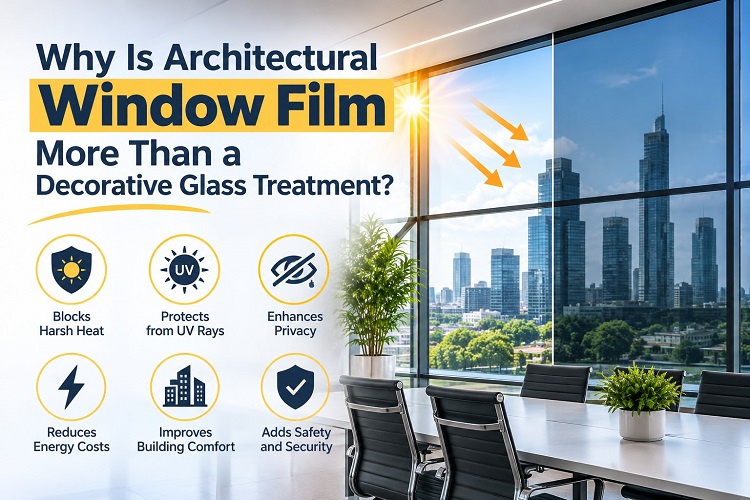
Glass can transform a building. It brings in daylight, creates visual openness, and gives interiors a modern character. But large glass surfaces can also introduce challenges involving heat, glare, UV exposure, privacy, and safety.
That is where architectural window film Philippines solutions become more than a decorative glass treatment. Modern films can turn existing glass into a more functional part of a residential or commercial space without changing the entire window system.
Architectural window film is a thin film applied to existing glass to provide specific performance or design benefits. Depending on the type selected, it can help with solar heat control, UV protection, glare reduction, privacy, decoration, or glass safety.
This makes it different from choosing glass purely for its appearance.
For buildings in the Philippines, the climate is an especially important consideration. Architectural films are developed for tropical conditions involving strong sun exposure, higher temperatures, humidity, and year-round heat.
One of the biggest reasons to consider architectural film is the amount of solar heat that can enter through windows.
A room with extensive glazing may become noticeably warmer when sunlight falls directly through the glass. This can affect indoor comfort and make temperature management more demanding.
Solar control films provide another layer between the interior and the effects of sunlight. Nano-Tech’s architectural range includes films designed for solar heat control, with the Max Series specifically positioned to help reject infrared heat and reduce solar heat gain.
For offices, homes, restaurants, and other spaces with substantial glass areas, this makes window film a functional building solution rather than a purely visual upgrade.
Sunlight does more than raise indoor temperatures.
Ultraviolet exposure can affect furnishings, finishes, and other interior elements over time. Architectural window film can add a layer of UV protection to glass while allowing the space to retain its connection with natural light.
This can make UV protection an important consideration when selecting film for spaces with valuable interiors or extensive glass.
Privacy is another reason architectural film goes beyond decoration.
Offices, meeting rooms, homes, restaurants, and commercial spaces may need more visual separation without completely blocking natural light. Different film finishes can provide varying levels of privacy while maintaining the overall character of the space.
One Way Window Film combines privacy with solar heat control, glare reduction, and UV protection. The Charcoal Series is designed to provide daytime privacy alongside solar heat control and glare reduction.
The right choice therefore depends on what the room needs, not simply how the glass should look.
Functional does not mean unattractive.
Architectural films can change how glass interacts with the rest of an interior. A darker finish can create a more refined appearance, reflective film can give a contemporary exterior character, while decorative film can turn plain glass into a visual feature.
Nano-Tech offers several architectural options, including Reflective, Charcoal, Clearsky, and Decorative Film Series. The Decorative Film Series is specifically positioned to transform ordinary glass into a design feature while maintaining a bright, open atmosphere.
This gives architects, property owners, and designers more flexibility when working with existing glass.
Not every architectural film is selected for solar control or aesthetics.
Security and safety films are designed for another purpose. Nano-Tech’s Security and Safety Film Series adds a protective layer to glass that is intended to help hold broken glass together when damage occurs.
For properties where glass protection is an important consideration, this type of film can provide a function that decorative treatments simply cannot.
There is no single architectural film that suits every building.
Start by identifying the main issue you want to address. For example:
The amount of natural light you want to retain, the location of the windows, and whether the project is residential or commercial should also influence the selection.
Calling window film a decorative treatment overlooks what modern film technology can actually accomplish.
The right architectural window film Philippines solution can influence indoor comfort, solar heat exposure, UV protection, privacy, appearance, and in certain applications, glass safety. Nano-Tech’s architectural range reflects this broader approach, with options designed for homes, offices, restaurants, and commercial spaces.
The next time you look at a large glass surface and think about changing its appearance, consider the bigger question: what could that glass do better?
With the right film, the answer can involve much more than aesthetics.
What is architectural window film used for?
Architectural window film can be used for solar heat control, UV protection, glare reduction, privacy, decorative enhancement, and glass safety, depending on the film selected. It can be applied across residential and commercial spaces with different performance requirements.
Why is architectural window film useful in the Philippines?
The Philippine climate includes strong sun exposure, high temperatures, and humidity. Films designed for tropical conditions can help address solar heat, glare, and UV exposure while maintaining the appearance and functionality of existing glass.
Can architectural window film improve privacy?
Yes. Certain architectural films are designed specifically to increase privacy. Options such as one-way and charcoal films can reduce outside visibility while also providing other functions such as solar heat control, glare reduction, and UV protection.
Does architectural film only come in dark finishes?
No. Architectural films are available in different finishes and visual characteristics. Depending on the product, options can include clear, charcoal, reflective, decorative, and privacy focused finishes, allowing property owners to balance appearance with performance.
What does Nano-Tech offer for architectural glass?
Nano-Tech offers multiple architectural film series, including ADUV900, Clearsky, Max, Charcoal, Reflective, V.I.P., One Way, Decorative, and Security and Safety Film Series. Each is positioned around different combinations of comfort, protection, privacy, or design.